Not a government app. Sparkwise is an independent study app made by Kodfu Bilisim. It is not affiliated with or endorsed by the IET, BSI, City & Guilds, ECS or JIB. It does not contain the real exam questions and never reproduces BS 7671 text.
Environmental: free ECS HS&E practice questions
Waste duty of care, WEEE, hazardous waste, pollution, spills, nuisance and saving energy.
10 original questions from the Sparkwise app, each with the answer and an explanation. Closed book, like the real assessment: answer first, then open the explanation. No sign-up, nothing saved. These are not the real exam questions: no app or website can show you those.
Question 1 · Choose one answer
Which law places a 'duty of care' on anyone who produces, carries or disposes of waste?
- Environmental Protection Act 1990
- Manual Handling Operations Regulations 1992
- Work at Height Regulations 2005
- Electricity at Work Regulations 1989
Show the answer
Answer A: Environmental Protection Act 1990
Section 34 of the Environmental Protection Act 1990 sets out the waste duty of care.
Source: Environmental Protection Act 1990 s34
Question 2 · True or false?
A business can be held responsible if waste it handed to someone else is later fly-tipped.
- True
- False
Show the answer
Answer A: True
The duty of care means you must take reasonable steps to make sure your waste is handled lawfully, including checking who takes it.
Source: Environmental Protection Act 1990 s34
Question 3 · Choose one answer
When dealing with site waste, which option should be used only as a last resort?
- Disposal to landfill
- Reuse on another job
- Recycling the material
- Preventing the waste
Show the answer
Answer A: Disposal to landfill
Disposal is the last resort, used only when nothing else is practicable.
Source: Waste (England and Wales) Regulations 2011
Question 4 · Choose one answer
Your site has separate skips for metal, timber, cardboard and general waste. What is the main benefit?
- More is recycled and hazardous waste kept out
- Each trade can then be charged for its own skip
- Mixed skips are illegal on all sites
- Separate skips are cheaper to hire
Show the answer
Answer A: More is recycled and hazardous waste kept out
Segregation keeps recyclable materials clean and stops hazardous waste contaminating general waste.
Source: Waste (England and Wales) Regulations 2011
Question 5 · Choose one answer
How should hazardous waste be handled on site?
- Taken home and put in a household bin
- Mixed with general waste to dilute it
- Kept separate for an authorised carrier
- Put in the nearest skip with other waste
Show the answer
Answer C: Kept separate for an authorised carrier
Hazardous waste needs separate storage and a consignment note when it is moved.
Source: Hazardous Waste Regulations 2005
Question 6 · Choose one answer
What does a crossed-out wheelie bin symbol on a product mean?
- It is made from recycled bins
- It can go in any skip on site
- It is safe to burn on site
- Do not put it in general waste
Show the answer
Answer D: Do not put it in general waste
The symbol shows the product is covered by WEEE rules and must be collected separately.
Source: WEEE Regulations 2013
Question 7 · Choose one answer
Diesel is leaking from a generator on site. What should you do?
- Hose it into the nearest surface water drain
- Stop it if safe, contain it and report it
- Cover it with soil and say nothing
- Leave it to evaporate in the sun
Show the answer
Answer B: Stop it if safe, contain it and report it
Quick containment with the spill kit stops fuel reaching drains and water. Report it so it is cleaned up properly.
Source: Environment Agency pollution prevention guidance
Question 8 · Choose one answer
Secondary containment (a bund) for fuel and oil stores should hold at least what share of the largest container?
- 100%
- 50%
- 75%
- 110%
Show the answer
Answer D: 110%
A bund that holds at least 110% of the largest container can contain a total failure, with a margin to spare.
Source: Oil Storage Regulations 2001
Question 9 · Choose one answer
How can a local authority control noisy construction work?
- By fining every worker on the site
- By banning all power tools nationally
- By setting permitted hours and methods
- By issuing parking tickets to workers
Show the answer
Answer C: By setting permitted hours and methods
Councils can serve notices restricting hours and methods, and contractors can agree conditions in advance.
Source: EPA 1990 s79 · Control of Pollution Act 1974
Question 10 · Choose one answer
Which of these is a simple way to save energy on site?
- Switch off lights, heaters and engines when idle
- Leave the generator running overnight
- Keep cabin heaters on all day with the windows open
- Leave tools on charge permanently
Show the answer
Answer A: Switch off lights, heaters and engines when idle
Switching off saves fuel and money and cuts emissions.
Source: GB F-gas rules · energy saving
You’ve seen 10 of 26 questions in this topic
The Sparkwise app has all 26, each with an explanation. Across the whole ECS HS&E there are 389 questions in 11 topics, plus timed 50-question mock exams of 30 minutes.
3 of them are free in the app, the rest come with Pro. Sparkwise Pro is £12.99 one-off and unlocks every question, every mock exam and every worked solution for both exams. No subscription.
Android now; iPhone version not yet available.
Revision notes
Waste duty of care
Under the Environmental Protection Act 1990, anyone who produces, stores, carries or disposes of waste has a duty of care. Keep waste secure so it cannot escape or be blown away, pass it only to a registered waste carrier, make sure it goes to a site allowed to take it, and complete a waste transfer note describing it. Keep transfer notes for at least two years. Fly-tipping is a crime, and a business can be held responsible if waste it handed over is dumped. Do not burn waste on site.
The waste hierarchy
The waste hierarchy ranks options from best to worst: prevent waste in the first place, prepare items for reuse, recycle, recover other value such as energy, and only then dispose of what is left, for example to landfill. On electrical jobs this means ordering accurately, measuring cable runs before cutting, reusing offcuts and containment where suitable, sending packaging back where suppliers take it, and separating metals, cardboard, plastics and other waste into the right skips so more can be recycled.
Hazardous waste
Some waste is hazardous and must never go in a general skip. On electrical work this includes fluorescent and other discharge lamps containing mercury; lead-acid, nickel-cadmium and mercury batteries; oils, solvents, some paints and adhesives; contaminated rags; and asbestos. Keep all batteries out of general waste. Older equipment can hold other hazards, such as PCBs in capacitors from before the mid-1980s. Keep hazardous waste separate and labelled, store it so it cannot leak or break, and use a registered carrier and permitted site, with the correct consignment paperwork.
WEEE
The Waste Electrical and Electronic Equipment (WEEE) Regulations 2013 aim to keep electrical waste out of landfill and recover its materials. Products carry a crossed-out wheelie bin symbol to show they must be collected separately, not put in general waste. Old luminaires, lamps, switchgear, consumer units and electronic devices removed during a job should go through an authorised WEEE route. New cable offcuts are not WEEE: recycle them as scrap metal. Some producers and distributors offer take-back schemes for the items they supply.
Pollution and spills
Surface water drains usually carry rainwater straight to streams and rivers without treatment, so never let oil, fuel, paint, chemicals or cement washings get into them. Store fuels and oils in bunded containers or on drip trays, with secondary containment able to hold at least 110% of the largest container. Know where the spill kit is. If a spill happens, stop the source if it is safe to do so, contain it, protect drains and report it. The Environment Agency, SEPA, Natural Resources Wales and NIEA enforce pollution law.
Nuisance, neighbours and wildlife
Construction noise, dust, vibration, mud on roads and bright lights can all become a statutory nuisance to neighbours. Local authorities can restrict working hours and methods. Use quieter tools and methods, keep to agreed hours, damp down dust and switch off engines when not in use. Wildlife is protected too: nesting birds and bats, which often roost in roof spaces and wall cavities, must not be disturbed. If you find bats or an active nest where you are working, stop and get advice.
Saving energy and greenhouse gases
Switch off temporary lighting, heaters, tools and site cabins when they are not needed, and do not leave vehicles or generators running for no reason. Good electrical design and controls save energy for the life of a building. Some switchgear contains sulphur hexafluoride (SF6), and air conditioning and heat pumps may use fluorinated gases. These are powerful greenhouse gases, so they must not be released; only properly certified people may handle or recover them.
More ECS HS&E topics
- Previous: Electrotechnical safetyElectricity at Work Regulations, safe isolation, test equipment, lock-off, live working, RCDs and solar PV.
- Next: General health and safety at workHealth and safety law, duties, risk assessment, method statements, CDM 2015, permits and safety signs.
- ECS HS&E assessment guideFormat, rules, booking and how to prepare

Practise both exams in the Sparkwise app
927 original questions across every Part of BS 7671:2018+A4:2026 and every ECS HS&E syllabus area, timed mock exams in the real format, worked solutions for calculations and explanations that show where to look in the book.
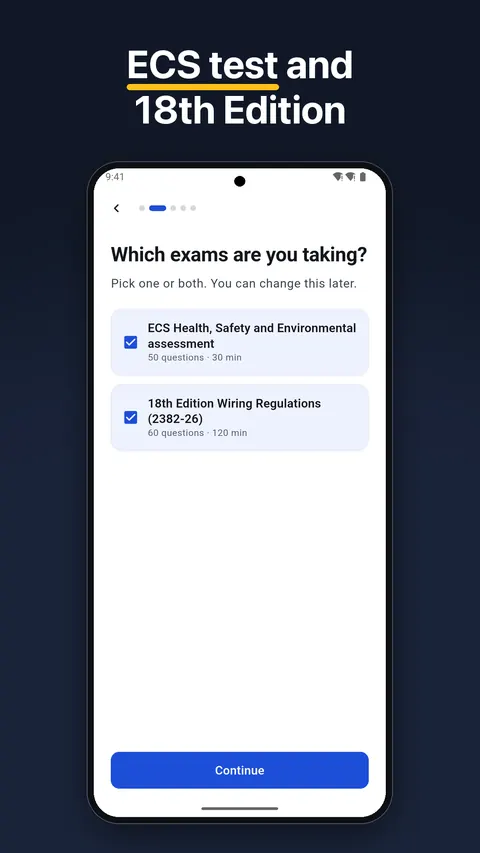
- 18th Edition: 538 questions, 60-question mock exams in 2 hours, a maximum Zs calculator and a guide to Amendment 4
- ECS HS&E: 389 questions and 50-question mock tests in 30 minutes
- Works offline. No ads, no account, no data collected.
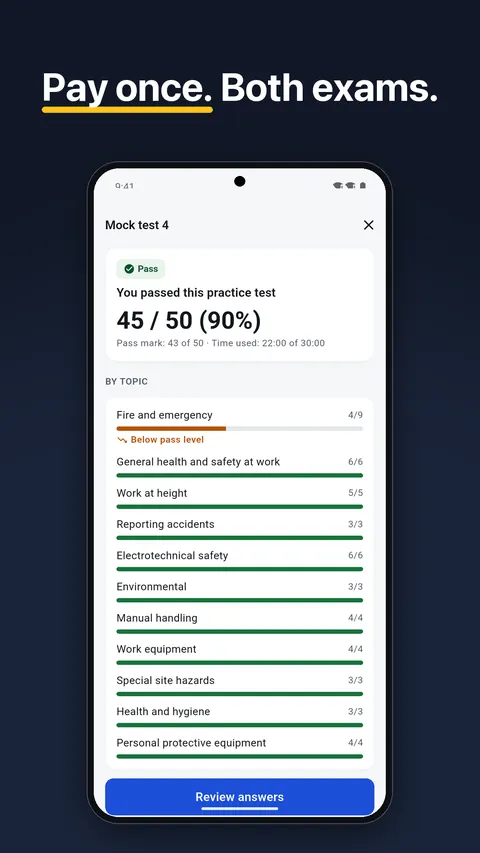
Free: two full topics in each exam, three questions in every other topic, one full mock exam for each exam, the maximum Zs calculator and checklists.
Sparkwise Pro, £12.99 one-off: every question, every mock exam and every worked solution, for both exams. No subscription.
Android now; iPhone version not yet available. Sparkwise helps you prepare; it cannot promise a pass.