Not a government app. Sparkwise is an independent study app made by Kodfu Bilisim. It is not affiliated with or endorsed by the IET, BSI, City & Guilds, ECS or JIB. It does not contain the real exam questions and never reproduces BS 7671 text.
Fire and emergency: free ECS HS&E practice questions
Fire triangle, extinguishers, fire stopping and compartmentation, hot work, evacuation, first aid and electric shock.
10 original questions from the Sparkwise app, each with the answer and an explanation. Closed book, like the real assessment: answer first, then open the explanation. No sign-up, nothing saved. These are not the real exam questions: no app or website can show you those.
Question 1 · Choose one answer
What three things does a fire need?
- Fuel, smoke and carbon dioxide
- Oxygen, water and electricity
- Heat, water and nitrogen
- Heat, fuel and oxygen
Show the answer
Answer D: Heat, fuel and oxygen
These three sides make up the fire triangle. Remove any one and the fire cannot continue.
Source: HSE: Fire safety in construction (HSG168)
Question 2 · Choose one answer
A fire in a deep fat fryer in a site canteen is which class?
- Class F
- Class C
- Class D
- Class A
Show the answer
Answer A: Class F
Class F covers cooking oils and fats. A wet chemical extinguisher or fire blanket is used, never water.
Source: BS EN 2 · BS EN 3 · BS 7863
Question 3 · Choose one answer
Which extinguisher is usually the best choice for a small fire in a distribution board?
- Water
- Foam
- CO2
- Wet chemical
Show the answer
Answer C: CO2
CO2 does not conduct electricity and leaves no residue, so it suits electrical equipment.
Source: BS EN 3 · fire extinguisher training
Question 4 · Choose one answer
You have put out a small fire with an extinguisher. What should you do next?
- Watch for re-ignition and report it was used
- Leave the area and say nothing more
- Put the extinguisher back on its stand
- Open all the windows to clear smoke, then go back
Show the answer
Answer A: Watch for re-ignition and report it was used
Fires can re-ignite. A used extinguisher must be replaced or refilled, so it has to be reported.
Source: BS EN 3 · fire extinguisher training
Question 5 · Choose one answer
Why must fire doors never be wedged open?
- They only hold back fire and smoke when shut
- It wears out the door's hinges and closer faster
- Wedges can damage the floor finish
- It lets heat escape from the corridor
Show the answer
Answer A: They only hold back fire and smoke when shut
An open fire door gives fire and smoke a free path. Self-closers must be allowed to work.
Source: Regulatory Reform (Fire Safety) Order 2005
Question 6 · Choose one answer
Why must you report to the person in charge at the assembly point?
- To be told when the site will reopen
- To sign out in the visitors' book
- So everyone can be accounted for
- So you can be given your next task
Show the answer
Answer C: So everyone can be accounted for
Roll calls tell the fire service whether anyone may still be inside.
Source: HSG168 · site emergency procedures
Question 7 · Choose one answer
Why is plugging one extension lead into another a fire risk?
- It makes overloading and overheating likely
- It can set off the building's fire alarm system
- It makes the voltage drop to zero
- It makes the combined lead too long
Show the answer
Answer A: It makes overloading and overheating likely
Daisy-chaining spreads many loads onto one socket and lead, which can overheat and start a fire.
Source: BS 7671 Reg 521.10.202 · Electrical Safety First
Question 8 · Choose one answer
A casualty is unresponsive but breathing normally. What should you do?
- Recovery position, and keep checking breathing
- Start chest compressions straight away
- Give them a drink of water to help revive them
- Sit them upright on a chair to recover
Show the answer
Answer A: Recovery position, and keep checking breathing
The recovery position keeps the airway open. Keep watching their breathing until help arrives.
Source: Resuscitation Council UK guidelines
Question 9 · Choose one answer
A gas leak is burning at a cylinder valve. Closing the valve, if it is safe to reach, puts the fire out by removing which side of the fire triangle?
- Oxygen
- Ignition
- Heat
- Fuel
Show the answer
Answer D: Fuel
Closing the valve stops gas reaching the flame, so the fire has nothing left to burn. Taking away any one of heat, fuel or oxygen puts a fire out: a blanket removes oxygen and water removes heat.
Source: HSE HSG168 · fire triangle
Question 10 · Choose one answer
A colleague has a deep cut to the forearm that is bleeding heavily. How should you control the bleeding?
- Tie a tight tourniquet above the cut
- Press firmly on it with a clean pad
- Wait for the bleeding to slow on its own
- Wash the wound under a running tap
Show the answer
Answer B: Press firmly on it with a clean pad
Firm direct pressure with a sterile dressing or clean non-fluffy cloth is the main way to stop severe bleeding; then call 999 and bandage the pad in place. Washing wastes time, and a tourniquet is only improvised if pressure fails, usually on the call handler's advice.
Source: St John Ambulance · severe bleeding
You’ve seen 10 of 61 questions in this topic
The Sparkwise app has all 61, each with an explanation. Across the whole ECS HS&E there are 389 questions in 11 topics, plus timed 50-question mock exams of 30 minutes.
3 of them are free in the app, the rest come with Pro. Sparkwise Pro is £12.99 one-off and unlocks every question, every mock exam and every worked solution for both exams. No subscription.
Android now; iPhone version not yet available.
Revision notes
The fire triangle and site fire risks
A fire needs three things: heat, fuel and oxygen. Take any one away and the fire goes out. Cooling with water removes heat, a fire blanket or lid removes oxygen, and shutting off a gas supply removes fuel. On electrical jobs common ignition sources include hot work, overheated or loose connections, overloaded leads and careless smoking. Fuel is everywhere: packaging, cable offcuts, timber, solvents and gas cylinders. Good housekeeping, keeping waste down and storing flammables properly all reduce the risk.
Fire classes and extinguisher colours
Fires are grouped by what is burning. Class A is ordinary solids such as wood, paper and fabric. Class B is flammable liquids, Class C flammable gases, Class D metals and Class F cooking oils and fats. Fires involving electrical equipment are not given a class letter but need special care. Extinguishers in the UK have red bodies with a coloured band or label: red for water, cream for foam, black for carbon dioxide (CO2), blue for dry powder and yellow for wet chemical.
Choosing and using an extinguisher
For fires in electrical equipment, CO2 is usually the best choice because it leaves no residue and does not conduct. Dry powder also works but makes a dense cloud that is hard to see through and breathe in a small room. Never use water or ordinary foam on live equipment. Only tackle a fire if you are trained, the alarm has been raised, the fire is small and your escape route is behind you. Aim at the base of the flames, do not hold a CO2 horn, and report any extinguisher you have used.
Fire stopping and compartmentation
Many buildings are divided into fire-resisting compartments. Walls, floors and cavity barriers are built to hold back fire and smoke for a set time, protecting escape routes and giving firefighters time. Every hole made for cables, trunking or tray through a fire-resisting wall or floor breaks that protection. It must be sealed with a fire-stopping product tested for that construction and those services, installed exactly as the manufacturer says. Ordinary expanding foam or filler is not fire stopping. Report any damaged or missing fire stopping you find. Trunking and large conduit need sealing inside as well as around the outside.
Fire doors, escape routes and fire law
Fire doors only work when they are shut, so never wedge or prop them open, and do not damage their seals or self-closers. Escape routes, stairs and exits must be kept clear at all times. Know where the alarm call points, extinguishers and assembly point are. In England and Wales the Regulatory Reform (Fire Safety) Order 2005 makes a 'responsible person' assess and manage fire risk in most non-domestic premises, and on construction sites the principal contractor plans fire precautions. Scotland and Northern Ireland have similar laws.
Hot work
Hot work includes welding, brazing, soldering with a flame, grinding and anything else that produces sparks or heat. It causes many site fires. First ask whether a cold method, such as crimping or bolted connections, can be used instead. If hot work is needed it is usually controlled by a permit. Remove or cover combustibles, have a suitable extinguisher at hand and check behind walls and below floors. Keep a fire watch during the work and for at least an hour afterwards, because materials can smoulder unseen.
Cables, leads and fire
Electrical faults and overloaded leads start many fires. Do not plug extension leads into each other or overload adaptors, and fully unwind cable reels used near their rating, because a coiled lead can overheat. BS 7671 requires wiring systems to be supported so that they will not collapse early in a fire. Cables that fall from failed plastic clips or trunking can trap firefighters, so use fire-resistant supports such as metal clips or ties where needed.
Raising the alarm and evacuating
If you discover a fire, raise the alarm straight away using the nearest call point, then call 999 if the alarm does not do it automatically. When the alarm sounds, stop work, make your work safe only if it takes seconds, and leave by the nearest safe route. Do not use lifts or stop for belongings. Go to the assembly point and report to the person in charge so everyone can be accounted for. Do not go back in until you are told it is safe.
First aid priorities and CPR
In any emergency check for danger first, then for a response. Shout for help and call 999 or 112. Open the airway and check for normal breathing. If the casualty is not breathing normally, start CPR: 30 chest compressions in the centre of the chest, about 5 to 6 cm deep at 100 to 120 a minute, then 2 rescue breaths if you are trained and willing. Send someone for a defibrillator (AED) and use it as soon as it arrives. A casualty who is breathing but unresponsive goes in the recovery position. Control heavy bleeding with firm direct pressure using a clean pad.
Electric shock: what to do
Never touch someone still in contact with electricity. Switch off and isolate the supply first. If you cannot, and it is low voltage, stand on something dry and insulating and push the person or the cable away with a dry wooden or plastic object. With high voltage, such as an overhead line, keep well away, call 999 and the network operator, and keep others back. Once safe, check breathing and start CPR if needed. Cool burns with running water and make sure anyone who has had a shock is checked by a medical professional.
More ECS HS&E topics
- Previous: Health and hygieneCOSHH, dust, noise, vibration, skin problems, Weil's disease, welfare and fitness for work.
- Next: Work at heightThe Work at Height Regulations, ladders, stepladders, scaffolds, mobile towers and MEWPs.
- ECS HS&E assessment guideFormat, rules, booking and how to prepare

Practise both exams in the Sparkwise app
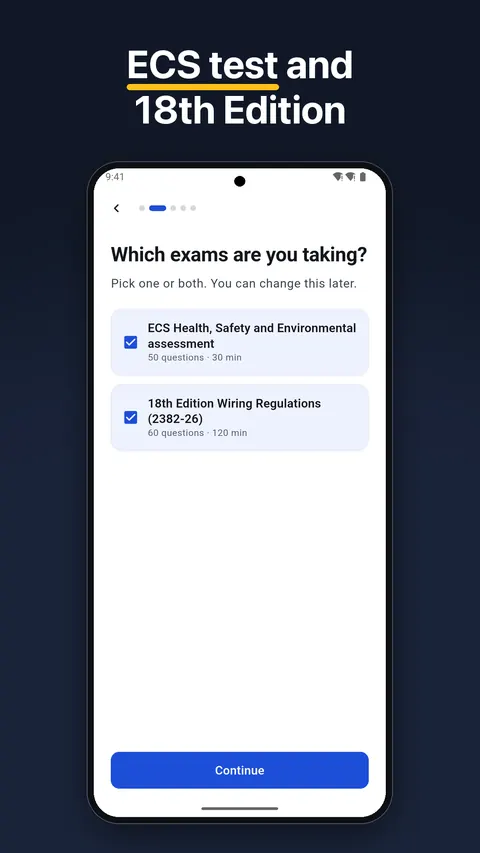
927 original questions across every Part of BS 7671:2018+A4:2026 and every ECS HS&E syllabus area, timed mock exams in the real format, worked solutions for calculations and explanations that show where to look in the book.
- 18th Edition: 538 questions, 60-question mock exams in 2 hours, a maximum Zs calculator and a guide to Amendment 4
- ECS HS&E: 389 questions and 50-question mock tests in 30 minutes
- Works offline. No ads, no account, no data collected.
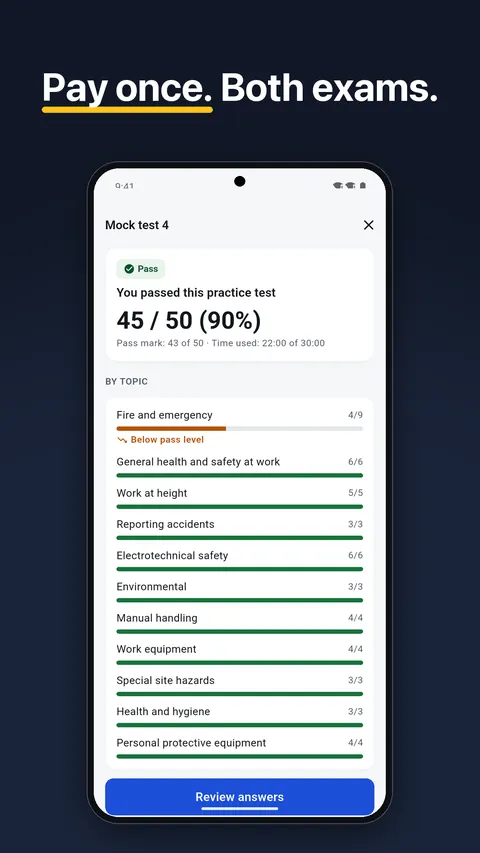
Free: two full topics in each exam, three questions in every other topic, one full mock exam for each exam, the maximum Zs calculator and checklists.
Sparkwise Pro, £12.99 one-off: every question, every mock exam and every worked solution, for both exams. No subscription.
Android now; iPhone version not yet available. Sparkwise helps you prepare; it cannot promise a pass.